

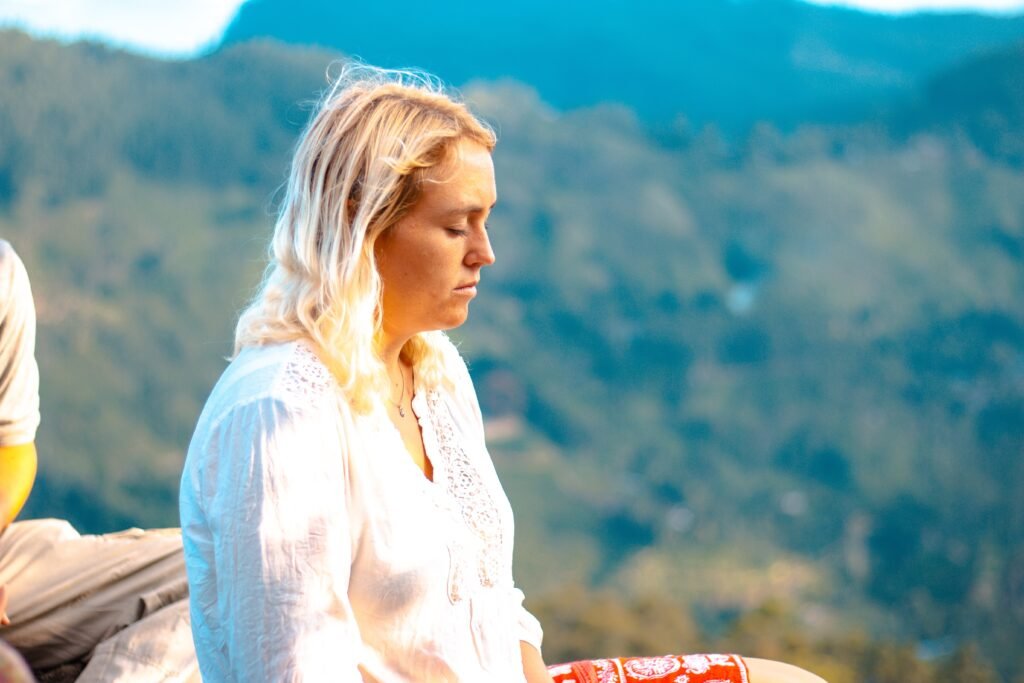
The idea of a meditation retreat sounds intimidating to almost everyone who’s never been on one – hours of silence, cross-legged on a cushion, thoughts you apparently aren’t allowed to have judged by strangers doing it better than you. None of that is quite how it actually works, and the gap between the idea and the reality is the main reason people put it off for years longer than they need to.
What a meditation retreat actually is
At its simplest, a meditation retreat is a stretch of days set aside specifically for practice – guided or independent, silent or social, structured or open – away from the usual pull of notifications and obligations. It isn’t a test. Nobody is scoring your stillness.
Do I need experience?
No, and this is worth stating plainly because it stops more people than almost anything else. Across meditation retreats in Bali generally, operators consistently report that a large proportion of first-time guests arrive with little or no prior practice. Beginners aren’t an afterthought in this world – they’re most of the room, or in a private setting, simply the only person who needs to know that.
Types of meditation retreat in Bali
Guided retreats pair you with a teacher who leads sessions and offers feedback – the most structured option, and often the most reassuring for a genuine first-timer.
Silent retreats remove speech and, often, technology, leaving long stretches of unguided time. More intense, and better suited to guests who already have some baseline comfort with their own company.
Yoga-combined retreats pair meditation with physical practice, which some beginners find easier to settle into than seated stillness alone – movement first, stillness second.
Self-directed private retreats offer space and optional guidance rather than a fixed programme, letting you build your own balance of structure and freedom.
What a typical day looks like
There’s real variation by retreat type, but a common shape runs: an early morning session, often around sunrise; breakfast; a period of rest or optional activity; an afternoon or evening session; an early night. Structured retreats fill more of the day with programming. Self-directed stays leave considerably more open, trusting you to use it well.
What to bring, and what to leave at home
Bring loose, comfortable clothing, a journal if you think better on paper, and lower expectations of your own concentration than you probably have – most beginners find their mind wanders considerably more than they expected, and that’s normal, not a failure. Leave behind the assumption that stillness will come easily by day two. For most people, it doesn’t, and that’s fine.
How to choose the right retreat as a beginner
Favour a retreat that explicitly welcomes beginners over one aimed at experienced practitioners – the difference in pacing and expectation is real. Favour smaller groups or private settings over large ones if the idea of visible “failure” in front of others makes you anxious. And favour somewhere with genuinely open time over a fully packed schedule; beginners often need more unstructured space to process a new practice than a tight itinerary allows.
Solo vs group retreats
A group retreat offers community and the reassurance of shared experience – useful if isolation is part of what’s driving you to go. A solo, private stay offers total control over pacing, which tends to suit anyone who finds performing stillness in front of others counterproductive to actually finding it.
Spotlight: a private meditation retreat in Lovina
Taman Ganesha, a six-villa complex in North Bali, offers a genuinely low-pressure entry point for beginners specifically because there’s no group to keep pace with. One villa, Sadewa, has its own private garden meditation gazebo; the shared shala garden is available for anyone who wants company; and guided sessions with an in-house teacher can be arranged for guests who’d rather not go it entirely alone.
The difference between meditation and mindfulness retreats
The terms overlap considerably, but meditation retreats generally centre on a specific seated or formal practice, while mindfulness retreats tend to weave present-moment awareness into everyday activities – eating, walking, even conversation – without necessarily involving formal seated meditation at all. Many retreats blend both without drawing a sharp line, so don’t over-index on the label.
Honest expectations – what it won’t fix
A meditation retreat won’t resolve a genuinely difficult life situation in a week, and treating it as a cure for something that needs ongoing support elsewhere sets an unfair bar. What it reasonably can offer is a reset – a few days of distance, a taste of a practice you might continue at home, and often a clearer sense of what you actually need next.
Frequently asked questions
Do I need experience for a Bali meditation retreat?
No. Most first-time guests at meditation retreats in Bali have little or no prior practice. Beginner-friendly, low-pressure settings – particularly private or small-group options – tend to suit newcomers best.
What’s the difference between yoga and meditation retreats?
Yoga retreats centre on physical practice, often with meditation woven in as a smaller component. Meditation retreats centre on seated or formal stillness practice, sometimes paired with light movement. Many retreats blend both.
How long should a first meditation retreat be?
Three nights is a reasonable starting point – enough to move past initial restlessness without committing to a lengthy programme before you know whether the format suits you.
Starting somewhere
Every experienced meditator was a beginner who felt awkward on day one. The retreat doesn’t need you to arrive ready – it just needs you to arrive.
➤ Explore meditation retreats at Taman Ganesha Private garden spaces and guided practice in Lovina. Learn more.