

Taman Ganesha has had three different lives before its current guests ever arrived – and at least two families whose names deserve more than a footnote in a “meet the owners” page. This is the long version of how a German artist’s dream, a pair of Balinese builders, and a British couple who arrived not knowing what they’d find, all ended up inside the same six villas in Lovina.
It starts, as these things sometimes do, with a name nobody chose on purpose.
In Balinese, taman simply means garden. Here, it’s meant more specifically: a garden reflects the full circle of life, a natural sanctuary where the environment is meant to support whoever’s standing in it, whatever they’re going through. Whether that’s a place to flourish, to root down, or quietly to heal, the garden is built to hold all three without asking which one you need today.
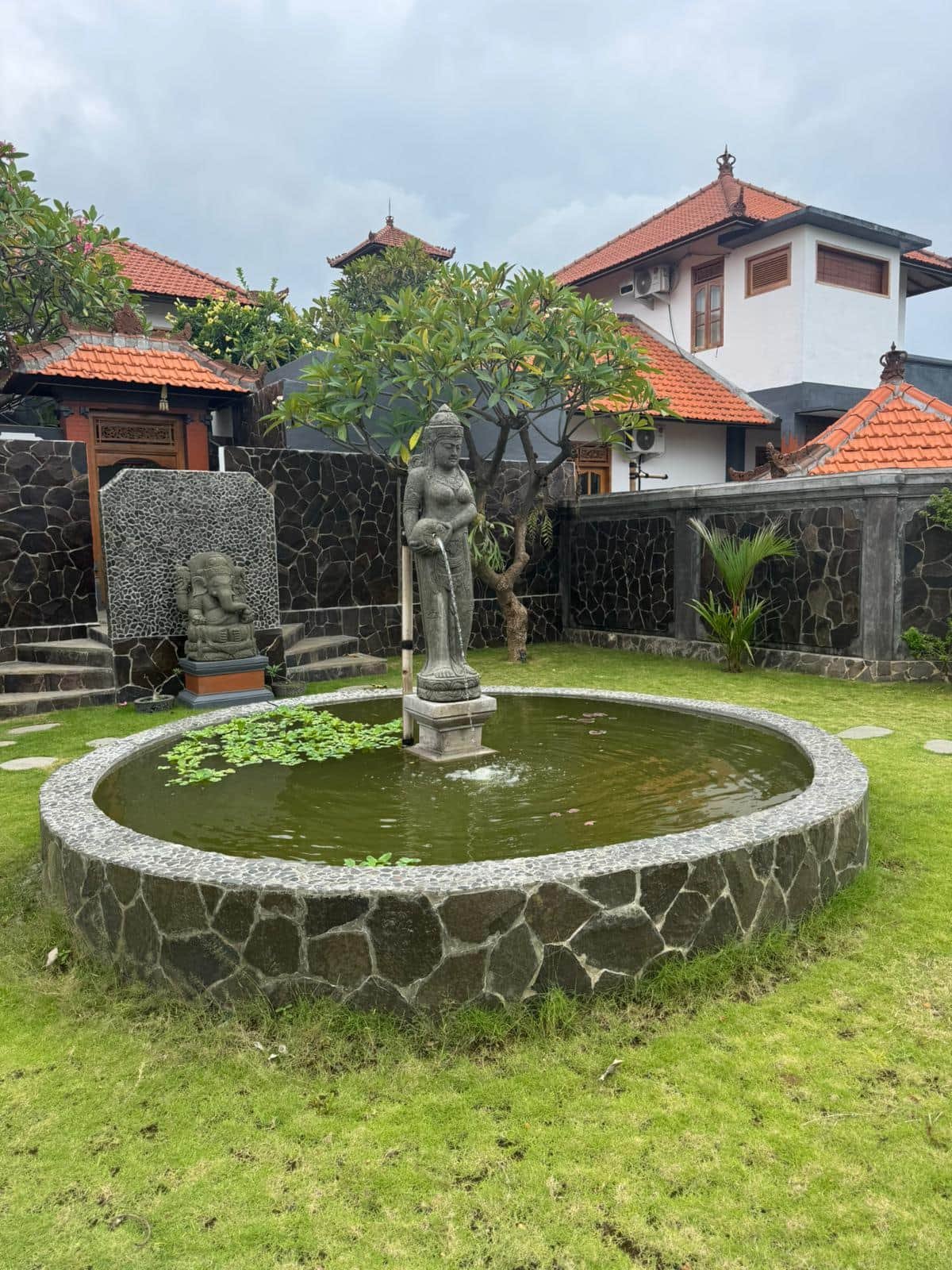
Understanding the meaning of Ganesha in Balinese culture helps explain why the name stuck as more than decoration. Ganesha is a widely revered figure across Hindu tradition – the remover of obstacles, sometimes called the whisperer of wisdom, invoked at the start of any undertaking precisely because obstacles are assumed to exist and need clearing rather than hoping they resolve themselves on their own. The property carried this name for years before its current custodians understood quite how fitting it was.
In the 1990s, a German artist named Klaus imagined a place where nature, creativity and peace could exist in the same square metre of land. Inspired by Bali, he designed what eventually became Taman Ganesha – not as a business plan, but closer to a personal conviction about how a place ought to feel.
Bringing that vision into brick and timber were two local builders, Pak Putu and Pak Komang, whose craftsmanship and evident respect for the land shaped every pathway and garden on the property. One space in particular carries their work especially visibly: what’s now Villa 5, Arjuna, was originally Klaus’s own art studio, its upper level fitted with the large windows and panoramic views he wanted for painting by natural light. Guests staying there today are, in a small way, working inside someone else’s creative intention.
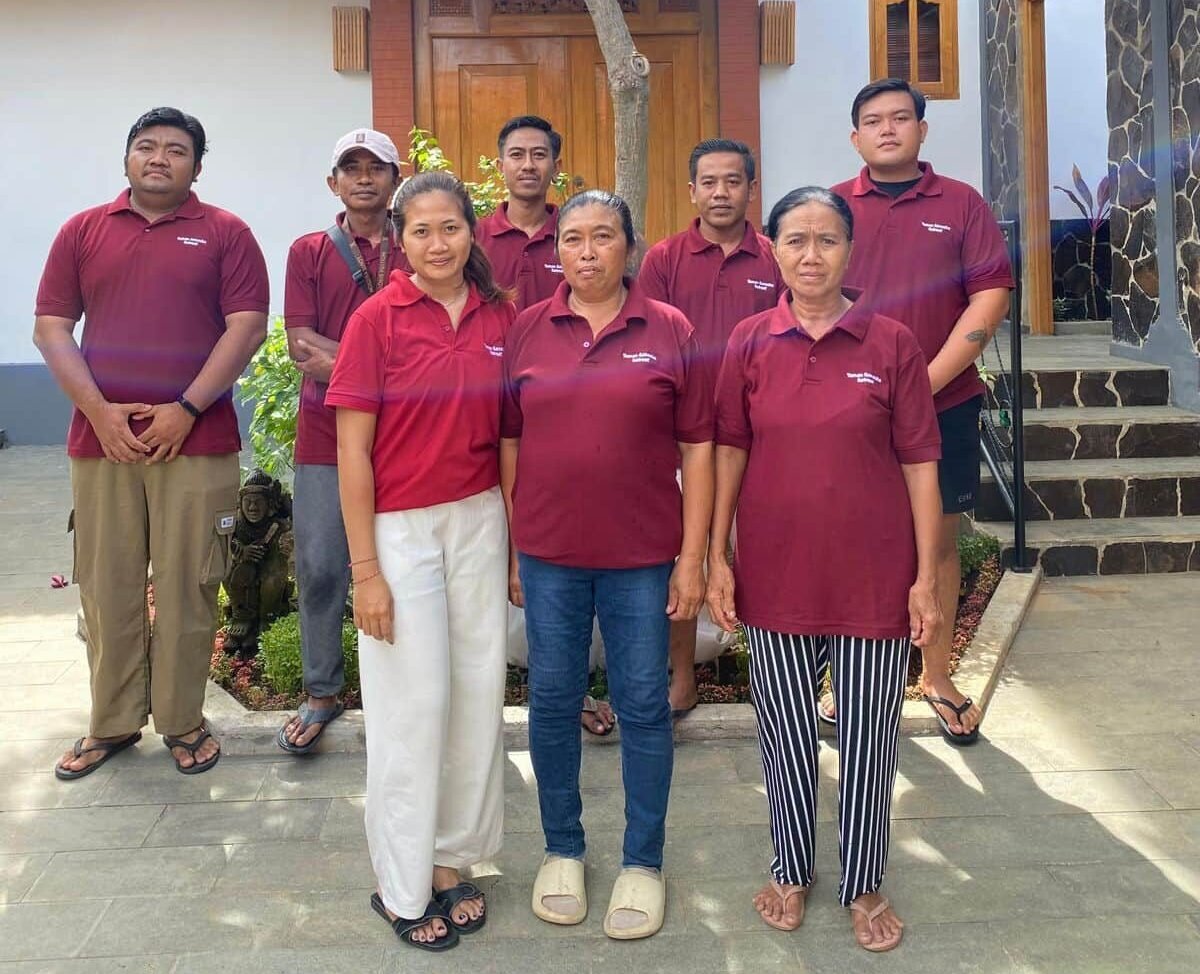
For more than two decades after Klaus’s original vision took shape, the retreat quietly welcomed guests seeking peace and a slower pace, largely under the radar. Pak Putu and Pak Komang’s families kept caring for the property throughout, preserving its character long after Klaus himself had moved on. Friendships were made here. People came back. None of it was marketed particularly hard; it simply worked, the way well-built things sometimes do without needing to explain themselves.
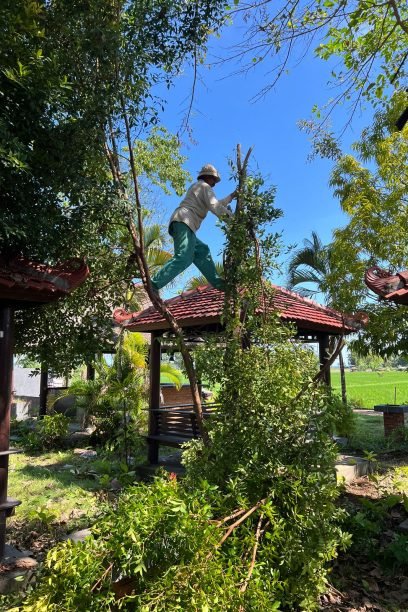
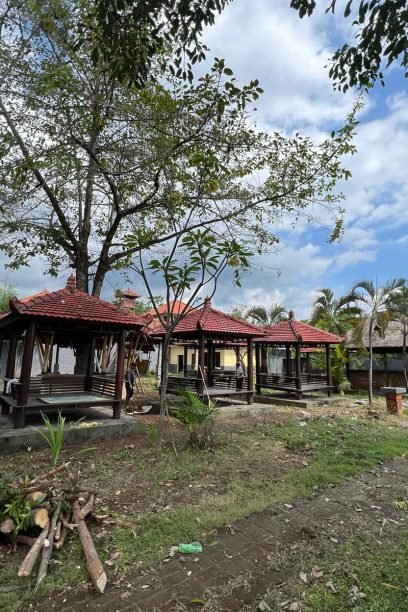
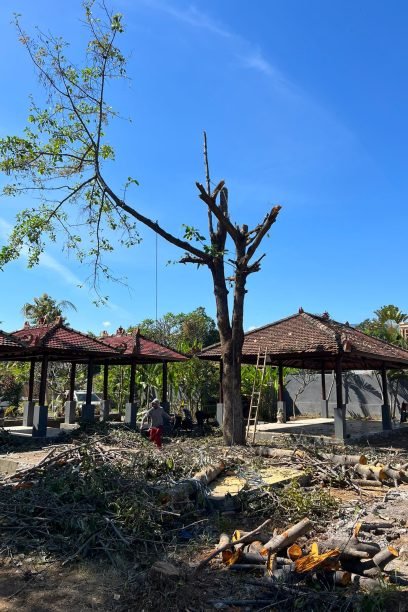
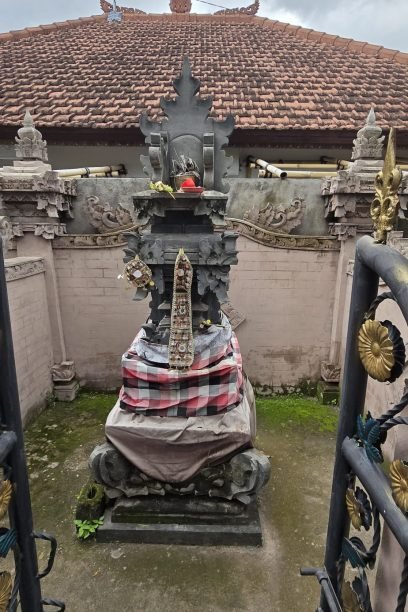
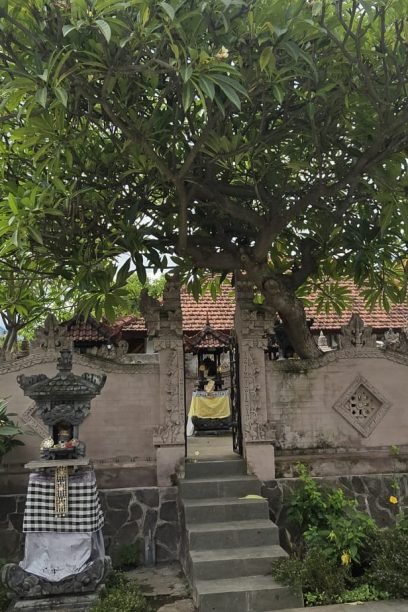
On the 30th of March 2023 – exactly ten years to the day after the passing of their son Ryan – Robert and Sue arrived in Bali to view a property they knew almost nothing about.
Ryan’s nickname throughout his life had been “Ganesh,” given to him as a child because of his distinctive ears. When Robert and Sue discovered the property they’d come to view was already called Taman Ganesha, what should have felt like a coincidence didn’t feel like one at all. They became its custodians within weeks, not entirely sure yet what they’d taken on, only that they weren’t leaving.
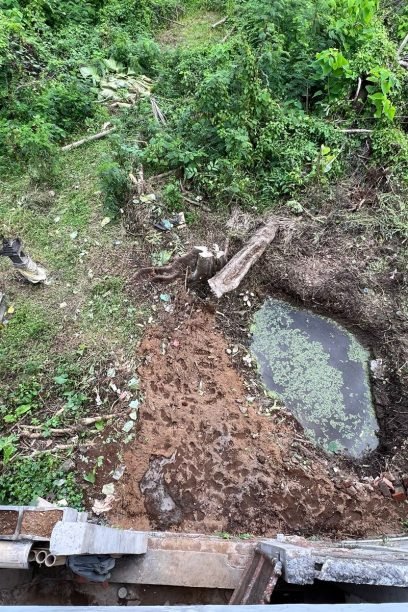
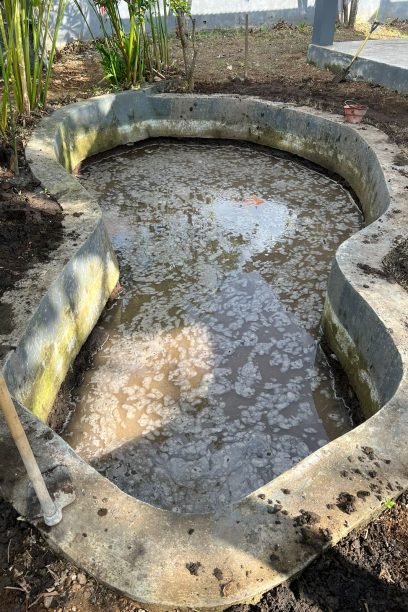
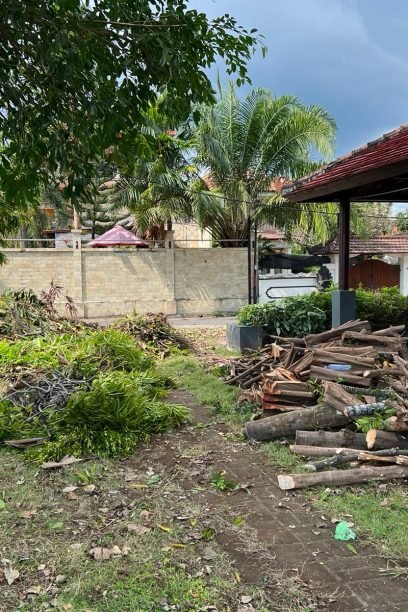
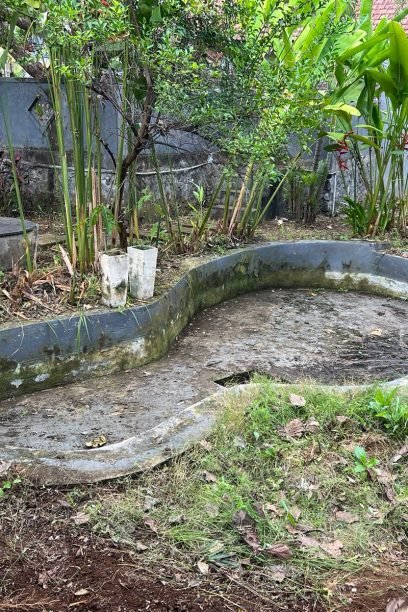
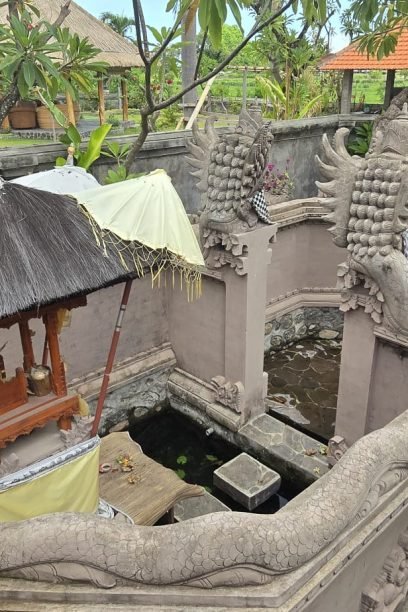
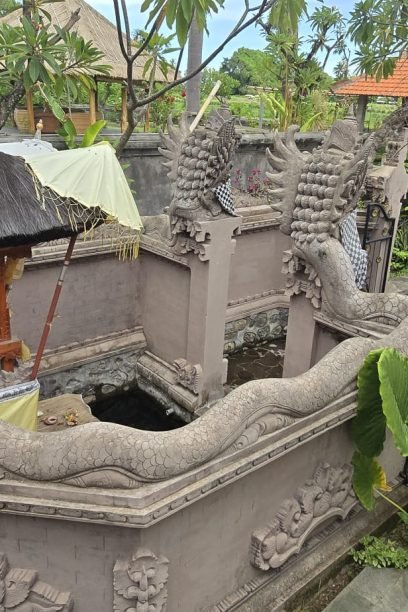
During a later expansion of the retreat’s gardens, the team acquired a neighbouring plot that had previously operated as a restaurant. While clearing the site, they found something nobody had gone looking for: beneath an old fish pond lay the remains of a forgotten water temple, built around a natural spring that had simply been buried and forgotten.
Local spiritual leaders were called in to look at it. They recognised the spring’s significance immediately and advised that the site be restored to its original purpose rather than landscaped over. A new holy water temple now stands there, the spring flowing again toward the property’s ancient sacred tree and the surrounding rice fields – open today to guests and to the local community, much as it likely was generations ago. Guests curious about what happens there can read more about Bali spiritual healing and the Melukat ceremony offered on-site.
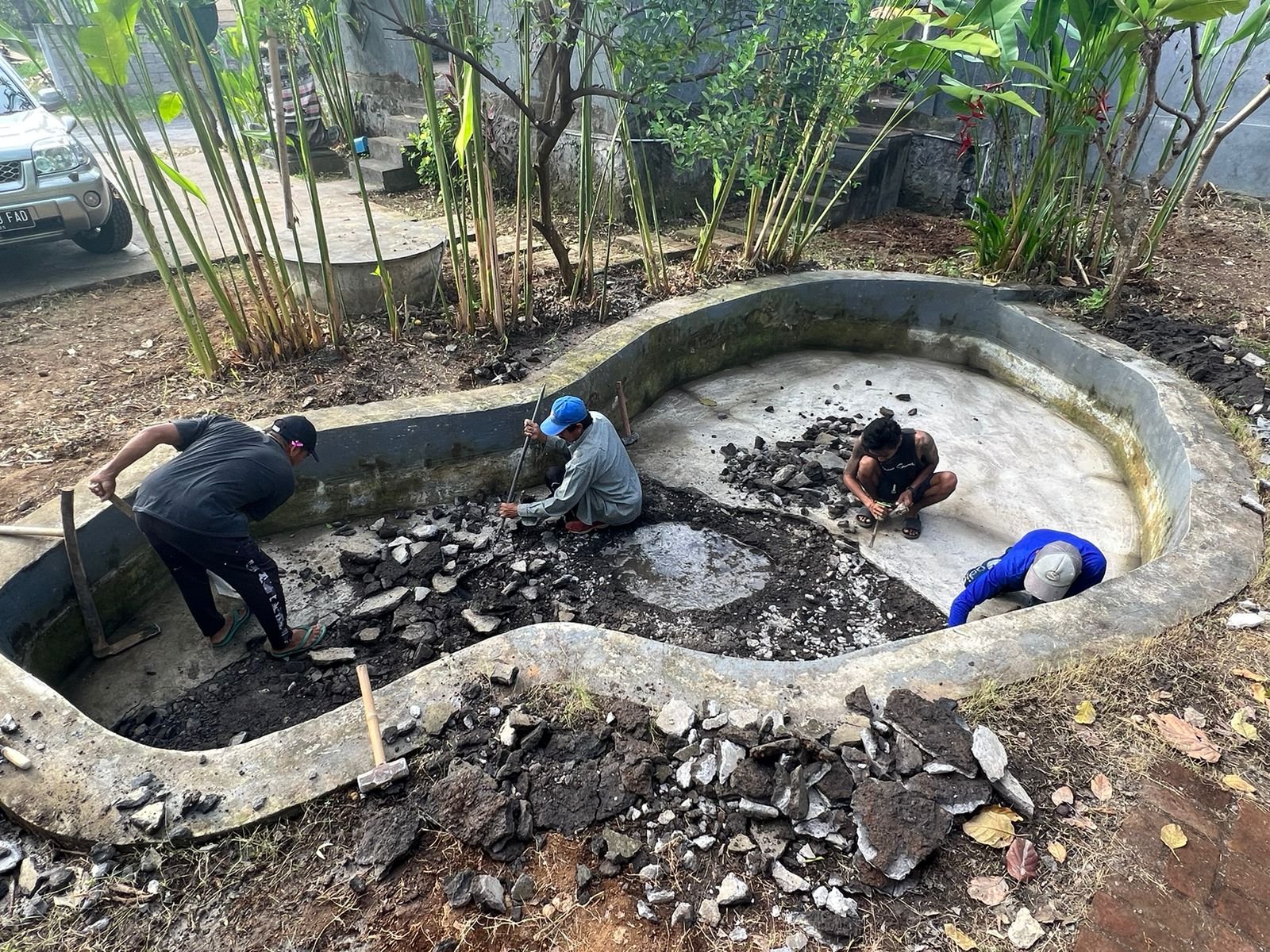
Over the following two years, Robert and Sue renovated the property carefully, working alongside the very people who’d helped build it decades earlier – Pak Putu, Pak Komang, and their families, whose knowledge of the land turned out to matter more than any outside contractor’s. What began as a renovation project became something closer to a shared family undertaking between two households who’d never expected to be connected.
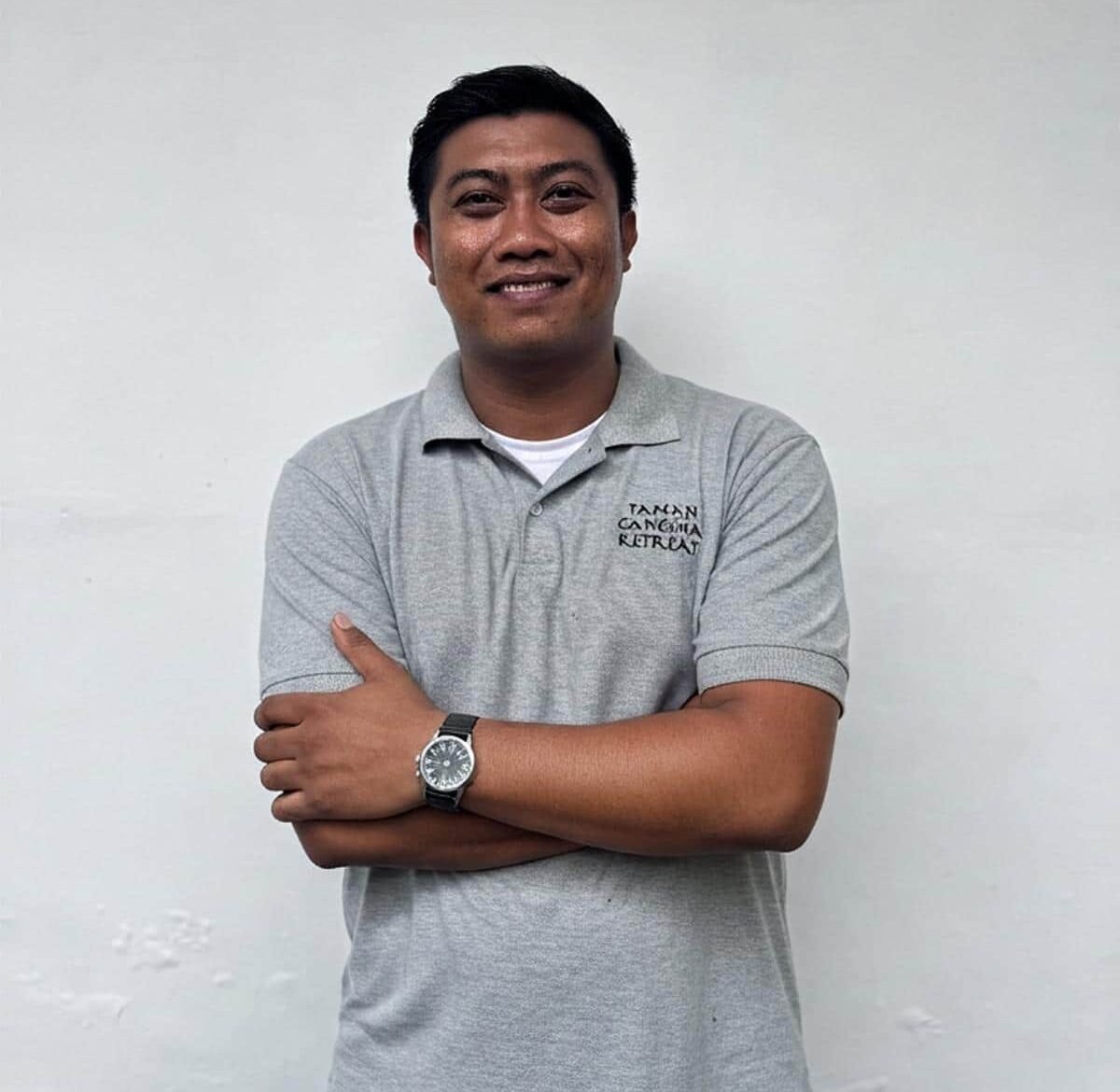
Today, Meggi – whose own family ties to the property span back to its earliest years – serves as the retreat’s overall manager, leading a local team whose relationship to Taman Ganesha didn’t start when Robert and Sue arrived, and won’t end with them either.
None of this needs explaining to enjoy a private pool and a good night’s sleep. But for guests who arrive already carrying something – grief, a decision, the sense that something needs to shift – it tends to matter that the place itself has a history of exactly that: obstacles met, and quietly, patiently, cleared.
Taman is the Balinese word for garden. At Taman Ganesha, it describes the property's approach to hospitality - a natural sanctuary intended to support whatever a guest needs, whether that's rest, connection, or space to process something difficult.
Ganesha is one of the most widely recognised deities in Hindu tradition, commonly depicted with an elephant head and revered as the remover of obstacles. He's typically invoked at the beginning of a new undertaking, journey, or significant life passage.
Beyond removing obstacles, Ganesha is associated with wisdom and new beginnings, often described as a guide toward self-understanding. Many guests find the symbolism resonates regardless of religious background, simply as a framework for approaching change.
Yes. The property is run by Robert and Sue, who became its custodians in 2023, working alongside Meggi and the local families - descendants of the original builders - who have cared for the land for over two decades.
Immerse yourself in the enchanting allure of North Bali, where Lavina Beach serves as a gateway to a world of serene beauty and cultural richness. From the soft black sands kissed by gentle waves to the lush landscapes that cradle this coastal paradise, North Bali invites you to embark on a transformative journey.